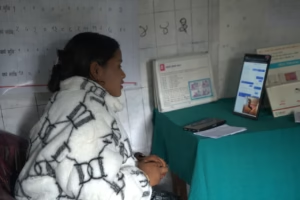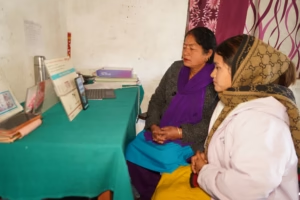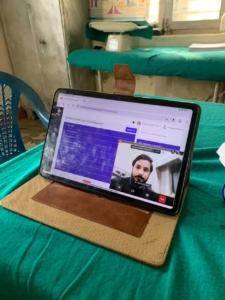

My field visit to Bajura and Baitadi was a very eye-opening and meaningful experience. Bajura and Baitadi are remote and hilly districts where transportation and health services are limited. Reaching the villages itself was challenging, with long walks on rough roads and limited vehicle access. When I arrived, I noticed that many people did not have easy access to hospitals or doctors. Some had to walk for hours just to reach the nearest health post. Because of this, many health problems were either ignored or treated very late. This aimed to solve this problem by connecting local patients with doctors through technology. I used mobile devices and internet-based systems to allow patients to consult doctors from cities without traveling far. During the field observation, it became evident that a large portion of the population does not have timely or convenient access to healthcare services. Health institutions are scarce, and the availability of qualified doctors and medical staff is limited. Many residents reported that they must travel several hours, and in some cases even an entire day, to reach the nearest health post or hospital. Due to such constraints, minor health issues often remain untreated and may eventually develop into serious medical conditions.
As part of this program, field visits were done to several health posts where the Smart Health program has been introduced. The field visit was a very positive and meaningful experience for us. We were warmly welcomed by the Mayor, Deputy Mayor, and other municipal staff. Their kindness and cooperation showed strong local support for this program. The municipality members along with health workers had a positive attitude towards this program. Health workers are effectively using the telehealth services to improve the health service delivery. Health workers shared that the program has a great potential to improve the healthcare services. The health workers were very attentive and supportive during the orientation program and suggested updating the toolkit with more features and requested refresher training to improve their skills. They also recommended that municipalities should regularly monitor health posts to support telehealth services and provide incentives to health workers as a way to encourage their continued dedication.The response from the local community was initially mixed, as many individuals were familiar and some individuals were unfamiliar with this digital technologies. However, after observing successful consultations and experiencing the convenience of remote medical advice, their confidence and acceptance of the system gradually increased. Patients expressed satisfaction as telehealth services reduced both travel time and associated costs, making healthcare more accessible.
Before the introduction of the Smart Health program, community people had to visit district hospitals of cities like Dhangadhi and Nepalgunj to receive doctors services. After the implementation of this program, community people got to receive the tele-consultation services of doctors through the nearby health post and were satisfied with the telehealth services. They also shared that they no longer need to travel long distances for medical consultations, which has saved them both time and money. Community people can receive medical advice in their own health facilities, making healthcare more affordable, accessible and convenient.
Having the geographical constraints, sometimes poor connectivity of the internet during the teleconsultation has been challenging to receive the services which has somehow hampered the patient satisfaction. Unavailability of the lab services and medicines has been a challenge to this program. To address this challenge, health workers are dedicated to manage the medicines from the nearby district hospital to maintain accessibility of medicines as advised by the doctors. However, the situation in some health facilities like Kolti Hospital, Pandusain Health Post was better than expected, as there was availability of lab services and most of the essential medicines.
Although challenges remain, the health workers were dedicated to use the telehealth services and improve access to quality health services which reassured that the initiative is truly helpful for the community. This reflects on making a positive and meaningful difference in the lives of rural people which resembles that a small effort and innovation can make a meaningful impact in the health of rural people.
About The Author
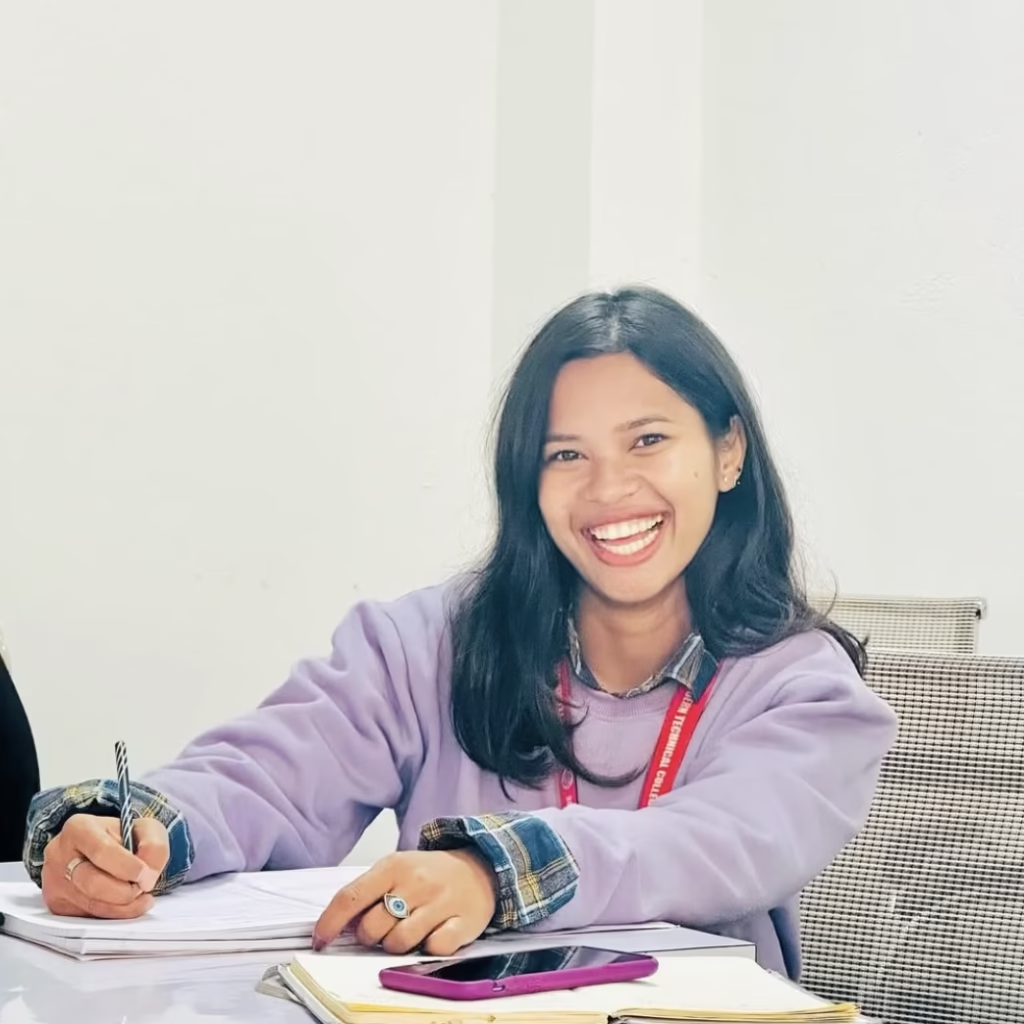
I am Susmita Khadka. I work as a Project Assistant at Smart Health Global (SHG).